here you have some articals written during the genocide...
Hannibal Travis, Assistant Professor of Law at Florida International University, wrote in the peer-reviewed journal Genocide Studies and Prevention: An International Journal that:
Numerous articles in the American press documented the genocide of Assyrians by the Turks and their Kurdish allies. By 1918, The Los Angeles Times carried the story of a Syrian, or most likely Assyrian, merchant from Urmia who stated that his city was ‘‘completely wiped out, the inhabitants massacred,’’ 200 surrounding villages ravaged, 200,000 of his people dead, and hundreds of thousands of more starving to death in exile from their agricultural lands. In an article entitled ‘‘Native Christians Massacred,’’ the Associated Press correspondent reported that in the vicinity of Urmia, ‘‘Turkish regular troops and Kurds are persecuting and massacring Assyrian Christians.’’ Close to 800 were confirmed dead in Urmia, and another 2,000 had perished from disease. Two hundred Assyrians had been burned to death inside a church, and the Russians had discovered more than 700 bodies of massacre victims in the village of Hafdewan outside Urmia, ‘‘mostly naked and mutilated,’’ some with gunshot wounds, others decapitated, and still others carved to pieces.
Other leading British and American newspapers corroborated these accounts of the Assyrian genocide.
The New York Times reported on 11 October that 12,000 Persian Christians had died of massacre, hunger, or disease; thousands of girls as young as seven had been raped or forcibly converted to Islam; Christian villages had been destroyed, and three-fourths of Christian villages burned to the ground. The Times of London was perhaps the first widely respected publication to document the fact that 250,000 Assyrians and Chaldeans eventually died in the Ottoman genocide of Christians, a figure which many journalists and scholars have subsequently accepted....
As the Earl of Listowel, speaking in the House of Lords on 28 November 1933, stated, ‘‘the Assyrians fought on our side during the war,’’ and made ‘‘enormous sacrifices,’’ having ‘‘lost altogether by the end of the War about two-thirds of their total number.’'....
About half of the Assyrian nation died of murder, disease, or exposure as refugees during the war, according to the head of the Anglican Church, which had a mission to the Assyrians.[3]
In April 1915, Ottoman Troops easily invaded Gawar, a region of Hakkari, and massacred the entire population.[citation needed] Prior to this, in October of 1914, 71 Assyrian men of Gawar were arrested and taken to the local government centre in Bashkalla and killed.[4]
Also in April, Kurdish troops surrounded the village of Tel Mozilt and imprisoned 475 men (among them, Reverend Gabrial, the famous red-bearded priest). The following morning, the prisoners were taken out in rows of four and shot. Arguments rose between the Kurds and the Ottoman officials on what to do with the women and orphans left behind. In the end, the army decided to kill them as well.
In late 1915, Djeudet Bey, Military Governor of Van Province, upon entering Siirt (or Seert) with 8,000 soldiers whom he himself called the "The Butchers' Battalion" (Kasap Taburu), gave orders for the massacre of almost 20,000 Assyrian civilians in at least 30 villages.
During the Winter of 1915, 4,000 Assyrians died from disease, hunger, and exposure, and about 1000 were killed in villages of Urmia.
Massacre of Khoi, Persia
In early 1918, many Assyrians started to flee present-day Turkey. Mar Shimon Benyamin had arranged for some 3,500 Assyrians to reside in the district of Khoi. Not long after settling in, Kurdish troops of the Ottoman Army massacred the population almost entirely. One of the few that survived was Reverend John Eshoo. After escaping, he stated:
You have undoubtedly heard of the Assyrian massacre of Khoi, but I am certain you do not know the details."
These Assyrians were assembled into one caravansary, and shot to death by guns and revolvers. Blood literally flowed in little streams, and the entire open space within the caravansary became a pool of crimson liquid. The place was too small to hold all the living victims waiting for execution.
They were brought in groups, and each new group was compelled to stand over the heap of the still bleeding bodies and shot to death. The fearful place became literally a human slaughter house, receiving its speechless victims, in groups of ten and twenty at a time, for execution.
At the same time, the Assyrians, who were residing in the suburb of the city, were brought together and driven into the spacious courtyard of a house [...] The Assyrian refugees were kept under guard for eight days, without anything to eat. At last they were removed from their place of confinement and taken to a spot prepared for their brutal killing. These helpless Assyrians marched like lambs to their slaughter, and they opened not their mouth, save by sayings "Lord, into thy hands we commit our spirits. [...]
The executioners began by cutting first the fingers of their victims, join by joint, till the two hands were entirely amputated. Then they were stretched on the ground, after the manner of the animals that are slain in the Fast, but these with their faces turned upward, and their heads resting upon the stones or blocks of wood Then their throats were half cut, so as to prolong their torture of dying, and while struggling in the agony of death, the victims were kicked and clubbed by heavy poles the murderers carried Many of them, while still laboring under the pain of death, were thrown into ditches and buried before their souls had expired.
The young men and the able-bodied men were separated from among the very young and the old. They were taken some distance from the city and used as targets by the shooters. They all fell, a few not mortally wounded. One of the leaders went to the heaps of the fallen and shouted aloud, swearing by the names of Islam's prophets that those who had not received mortal wounds should rise and depart, as they would not be harmed any more. A few, thus deceived, stood up, but only to fall this time killed by another volley from the guns of the murderers.
Some of the younger and good looking women, together with a few little girls of attractive appearance, pleaded to be killed. Against their will were forced into Islam's harems. Others were subjected to such fiendish insults that I cannot possibly describe. Death, however, came to their rescue and saved them from the vile passions of the demons. The death toll of Assyrians totaled 2,770 men, women and children.[7]
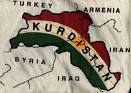
Now you still want to tell me, that you want an Assyria but not at Kurdistan?
My people sufferd greatly, their blood flowed on this area, you nor anyone else (humans) can tell Assyrians what to do or what not to claim theirs!
http://en.wikipedia.org/wiki/Assyrian_Genocide
if you are interested you can read here more....
There have been also good people during this war who tried and some even succed to safe their Assyrian and Armenian neighbours...Good bless their families and give them enternel life in paradise!