Navigator
Facebook
Search
Ads & Recent Photos
Recent Images
Random images
Welcome To Roj Bash Kurdistan 

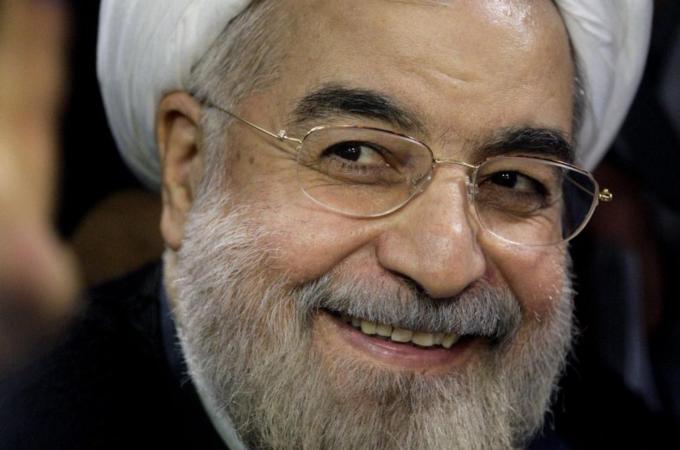
Hassan Rouhani: Can he break Iran nuclear impasse?

A place to talk about domestic politics in Middle East (Iran, Iraq , Turkey, Syria) Also includes topics about Assyrian, Armenian, Chaldean .

Hassan Rouhani: Can he break Iran nuclear impasse?

PostAuthor: Anthea » Sat Jun 15, 2013 12:43 pm

BBC News

Reformist-backed candidate Hassan Rouhani is maintaining a commanding lead with more than half the ballots counted in Iran's presidential poll.

Image
Hassan Rouhani has spoken about the need to re-engage with the West and has promised to free political prisoners

The cleric has just over 51% of 23 million votes counted so far - well ahead of the next candidate, Tehran Mayor Mohammad Baqer Qalibaf.

Mr Rouhani could win in the first round if he finishes with more than 50%.

Turnout was estimated at 80% among the 50 million Iranians eligible to vote for a successor to Mahmoud Ahmadinejad.

His eight years in power have been characterised by economic turmoil and Western sanctions against Iran over its nuclear programme.

Surge of support

Final results are expected later in the day.

Preliminary figures began to emerge early on Saturday after a delay of several hours.

Officials at the election headquarters said that with more than 23,014,873 votes counted - 22,247,364 of them valid:

Hassan Rouhani has 11,754,013 (51.07%)
Mr Qalibaf is in second place with 3,494,938
Mohsen Rezai lies third with 2,723,202 followed by Saeed Jalili on 2,593,169.

State TV channels said the winning candidate needed more than 50% of all ballots cast, including invalid ones, Reuters news agency reported.

Voting was extended by five hours on Friday evening to allow more people to cast their ballots. Iranian Press TV said turnout was 80%.

Although all six candidates are seen as conservatives, analysts say Mr Rouhani - a 64-year-old cleric often described as "moderate" who has held several parliamentary posts and served as chief nuclear negotiator - has been reaching out to reformists in recent days.

The surge of support for him came after Mohammad Reza Aref, the only reformist candidate in the race, announced on Tuesday that he was withdrawing on the advice of pro-reform ex-President Mohammad Khatami.

Mr Rouhani thus went into polling day with the endorsement of two ex-presidents - Mr Khatami and Akbar Hashemi Rafsanjani, who was disqualified from the race by the powerful Guardian Council, a 12-member body of theologians and jurists.

The hardline candidates include Mr Qalibaf - who is seen as a pragmatic conservative - and nuclear negotiator Mr Jalili - who is said to be very close to the Supreme Leader, Ayatollah Ali Khamenei.

The other three candidates are Mr Rezai, a former head of the powerful Revolutionary Guards, former Foreign Minister Ali Akbar Velayati, and former Telecommunications Minister Mohammad Gharazi.

Earlier, Interior Minister Mostafa Mohammad Najjar told state TV that any presidential candidates unhappy with the results would have three days to lodge complaints to the Guardian Council.

'Intimidation'

After the last presidential election in June 2009, millions of Iranians took to the streets to demand a re-run, when the supreme leader dismissed claims by the three defeated candidates of widespread fraud.

Two of them, former Prime Minister Mir Hussein Mousavi and senior cleric Mehdi Karroubi, became leaders of a nationwide opposition known as the Green Movement, after its signature colour.

They were placed under house arrested in February 2011 when they applied to stage a protest in support of the anti-government uprisings which were sweeping the Arab world. They are still being detained.

No foreign observers monitored this year's election and there have also been concerns that media coverage in the run-up has been unfair.

Many reformist newspapers have been shut down, access to the internet and foreign broadcasters has been restricted, and journalists have been detained.

On Thursday, the BBC accused the Iranian authorities of "unprecedented levels of intimidation" of BBC employees' families.

It said Iran had warned the families of 15 BBC Persian Service staff that they must stop working for the BBC or their lives in London would be endangered.

Tehran has so far made no comment on the allegation.

Link & Video:

http://www.bbc.co.uk/news/world-middle-east-22916174
Last edited by Anthea on Sun Jul 21, 2013 11:52 am, edited 11 times in total.
My Name Is KURDISTAN And I Will Be FREE
User avatar
Anthea
Shaswar
Shaswar
Donator
Donator
 
Posts: 31601
Images: 1151
Joined: Thu Oct 18, 2012 2:13 pm
Location: Sitting in front of computer
Highscores: 3
Arcade winning challenges: 6
Has thanked: 6019 times
Been thanked: 750 times
Nationality: Kurd by heart

Hassan Rouhani: Can he break Iran nuclear impasse?

Sponsor

Sponsor
 

Re: Hassan Rouhani leads Iran presidential election vote

PostAuthor: Anthea » Sat Jun 15, 2013 12:48 pm

Aljazeera

Rafsanjani backs Rouhani for Iran presidency. Former president says his moderate ally Hassan Rouhani is "more suitable" than others to lead the country.

Image

Iran's former moderate president Akbar Hashemi Rafsanjani has endorsed ally Hassan Rouhani in the June 14 election, saying the candidate is "more suitable" than others for the presidency.

Rouhani was Iran's former top nuclear negotiator under former president Mohammad Khatami and served as top security official under Rafsanjani.

"I will vote for Dr Rouhani, who entered the race after consulting me," Rafsanjani said in remarks reported by ILNA news agency on Tuesday.

"I consider him to be more suitable (than other candidates) to steer the executive branch," he said referring to the slate of five other hopefuls, most of whom are conservatives.

Earlier on Tuesday, Mohammad-Reza Aref, the sole reformist candidate in the presidential vote, withdrew from the race after receiving advice from Khatami, his website has reported.

"At dusk on Monday... I received a letter from Mohammad Khatami... he said it would not be wise for me to remain in the race," Aref wrote in his withdrawal statement on Tuesday.

In recent days, calls have grown from within the reformist camp for Aref to quit in favour of Rouhani.

Aref 's withdrawal from the race is the second in two days.

Ex-parliamentary speaker Gholam-Ali Haddad Adel, seen as close to Supreme Leader Ayatollah Ali Khamenei, pulled out of the race on Monday without endorsing any of the four remaining conservatives standing for election.

He was not considered a frontrunner in the presidential poll.

Khatami's advisory council in a statement threw their backing behind Rouhani as the "reformist camp candidate".

http://www.aljazeera.com/news/middleeas ... 55648.html
My Name Is KURDISTAN And I Will Be FREE
User avatar
Anthea
Shaswar
Shaswar
Donator
Donator
 
Posts: 31601
Images: 1151
Joined: Thu Oct 18, 2012 2:13 pm
Location: Sitting in front of computer
Highscores: 3
Arcade winning challenges: 6
Has thanked: 6019 times
Been thanked: 750 times
Nationality: Kurd by heart

Re: Hassan Rouhani leads Iran presidential election vote

PostAuthor: Anthea » Sat Jun 15, 2013 3:22 pm

Officials at election headquarters said that of 32,189,621 votes so far counted,
Mr Rouhani had secured 16,413,281 (50.98%).
Mr Qalibaf had 5,073,652 (15.76%)
My Name Is KURDISTAN And I Will Be FREE
User avatar
Anthea
Shaswar
Shaswar
Donator
Donator
 
Posts: 31601
Images: 1151
Joined: Thu Oct 18, 2012 2:13 pm
Location: Sitting in front of computer
Highscores: 3
Arcade winning challenges: 6
Has thanked: 6019 times
Been thanked: 750 times
Nationality: Kurd by heart

Re: Hassan Rouhani wins Iran presidential election

PostAuthor: Anthea » Sat Jun 15, 2013 4:14 pm

BBC News

Reformist-backed cleric Hassan Rouhani has won Iran's presidential election, securing just over 50% of the vote and so avoiding the need for a run-off.

Tehran Mayor Mohammad Baqer Qalibaf was well behind in second place.

Turnout was estimated at 72.2% among the 50 million Iranians who were eligible to vote to choose a successor to Mahmoud Ahmadinejad.

Supreme Leader Ayatollah Ali Khamenei is scheduled to ratify the vote on 3 August.

The new president will then take the oath in parliament.

'Best candidate'

Interior Minister Mostafa Mohammad Najjar announced that Mr Rouhani had won 18,613,329 of the 36,704,156 votes cast. This represented 50.68% of the vote.

Mr Qalibaf won 6,077,292 votes to take second place.

Mr Najjar said that any presidential candidates unhappy with the results would have three days to lodge complaints to the Guardian Council.

The winning candidate needed more than 50% of all ballots cast, including invalid ones, to avoid a run-off.
My Name Is KURDISTAN And I Will Be FREE
User avatar
Anthea
Shaswar
Shaswar
Donator
Donator
 
Posts: 31601
Images: 1151
Joined: Thu Oct 18, 2012 2:13 pm
Location: Sitting in front of computer
Highscores: 3
Arcade winning challenges: 6
Has thanked: 6019 times
Been thanked: 750 times
Nationality: Kurd by heart

Re: Hassan Rouhani wins Iran presidential election

PostAuthor: Anthea » Sat Jun 15, 2013 8:13 pm

BBC News

Hassan Rouhani

A religious moderate, fluent in English, German, French, Russian and Arabic
The only cleric contesting the Iranian presidential election
Key figure in Iranian politics who has held some of the country's top jobs, including chief nuclear negotiator
Has the backing of two former presidents

Image

Crowds gathered in Tehran to hail Mr Rouhani, who said he had achieved a "victory of moderation over extremism".

Some 72.2% of the 50 million eligible Iranian voters cast ballots to choose the successor to Mahmoud Ahmadinejad.

The US said it was "ready to engage directly" with Iran over its disputed nuclear programme.

Supreme Leader Ayatollah Ali Khamenei congratulated Mr Rouhani on his victory.

"I urge everyone to help the president-elect and his colleagues in the government, as he is the president of the whole nation," he said.

Ayatollah Khamenei will ratify the vote on 3 August and the new president will then take the oath in parliament.

Mr Rouhani, who has pledged greater engagement with Western powers, said: "This victory is a victory for wisdom, moderation and maturity... over extremism."

But he also urged the world to "acknowledge the rights" of Iran.

He said: "The nations who tout democracy and open dialogue should speak to the Iranian people with respect and recognise the rights of the Islamic republic."

'Different course'

Interior Minister Mostafa Mohammad Najjar announced that Mr Rouhani had won 18,613,329 of the 36,704,156 votes cast. This represented 50.71% of the vote.

Tehran Mayor Mohammad Baqer Qalibaf won 6,077,292 votes to take second place (16.56%).

Saeed Jalili came third and Mohsen Rezai fourth.

Mr Najjar said that any challenge by presidential candidates would have to be lodged to the Guardian Council within three days.

The winning candidate needed more than 50% of all ballots cast, including invalid ones, to avoid a run-off.

Crowds gathered in Vali-Asr Square in central Tehran and in Kaj Square in the north-west of the capital to hail the victory.

"Long live reform, long live Rouhani," members of the crowd chanted.

One of them told Reuters news agency: "Many people are holding Rouhani posters. Some are hugging and crying. We are all so happy here. We can't believe there is finally a change."

The US said it respected the vote, although White House spokesman Jay Carney cited concern at censorship and lack of transparency.

The US would "engage Iran directly" to find a "diplomatic solution that will fully address the international community's concerns about Iran's nuclear programme".

The UK Foreign Office urged Mr Rouhani to "set Iran on a different course for the future: addressing international concerns about Iran's nuclear programme... and improving the political and human rights situation for the people of Iran".

France said it was "ready to work" with the new leader

One of Mr Rouhani's main pledges was to try to ease international sanctions imposed on Iran over its nuclear programme.

Iran has been suffering economic hardship, with rising unemployment, a devalued currency and soaring inflation.

BBC diplomatic correspondent Jonathan Marcus says Mr Rouhani's election is not necessarily the moment for a substantive change in Iran's policy, but that even a change in style might offer an opening to the US and key UN Security Council members which would be worth testing for any real sign of flexibility in Tehran.
Endorsement

Voting had been extended by five hours on Friday evening to allow more people to cast their ballots.

Although all six candidates were seen as conservatives, analysts say Mr Rouhani - a 64-year-old cleric often described as "moderate" who has held several parliamentary posts and served as chief nuclear negotiator - has been reaching out to reformists in recent days.

The surge of support for him came after Mohammad Reza Aref, the only reformist candidate in the race, announced on Tuesday that he was withdrawing on the advice of pro-reform ex-President Mohammad Khatami.

Mr Rouhani thus went into polling day with the endorsement of two ex-presidents - Mr Khatami and Akbar Hashemi Rafsanjani, who was disqualified from the race by the powerful Guardian Council, a 12-member body of theologians and jurists.

The hardline candidates included Mr Qalibaf - who is seen as a pragmatic conservative - and nuclear negotiator Mr Jalili - who is said to be very close to Ayatollah Khamenei.

The other three candidates were Mr Rezai, a former head of the powerful Revolutionary Guards, former Foreign Minister Ali Akbar Velayati, and former Telecommunications Minister Mohammad Gharazi.

After the last presidential election in June 2009, millions of Iranians took to the streets to demand a rerun, when the supreme leader dismissed claims by the three defeated candidates of widespread fraud.

http://www.bbc.co.uk/news/world-middle-east-22916174

My Name Is KURDISTAN And I Will Be FREE
User avatar
Anthea
Shaswar
Shaswar
Donator
Donator
 
Posts: 31601
Images: 1151
Joined: Thu Oct 18, 2012 2:13 pm
Location: Sitting in front of computer
Highscores: 3
Arcade winning challenges: 6
Has thanked: 6019 times
Been thanked: 750 times
Nationality: Kurd by heart

Re: Hassan Rouhani victory of moderation over extremism

PostAuthor: Anthea » Sun Jun 16, 2013 9:57 pm

BBC News

Hassan Rouhani: I'm proud Iranians trusted me to serve

President-elect of Iran Hassan Rouhani has called on the Iranian people to help him develop the country and preserve its national pride and interests.

In his first television appearance since his unexpected victory, Mr Rouhani thanked his supporters.

A senior American official, Denis McDonough, said the result was "a potentially hopeful sign" that progress can be made over Tehran's nuclear programme.

But despite a cautious welcome by western nations, Israel has warned against "wishful thinking".

Mr Rouhani has described the election result as a triumph of wisdom over extremism.

Link & Video:
http://www.bbc.co.uk/news/world-middle-east-22928312
My Name Is KURDISTAN And I Will Be FREE
User avatar
Anthea
Shaswar
Shaswar
Donator
Donator
 
Posts: 31601
Images: 1151
Joined: Thu Oct 18, 2012 2:13 pm
Location: Sitting in front of computer
Highscores: 3
Arcade winning challenges: 6
Has thanked: 6019 times
Been thanked: 750 times
Nationality: Kurd by heart

Re: Hassan Rouhani: I'm proud Iranians trusted me to serve

PostAuthor: Anthea » Sun Jun 16, 2013 10:19 pm

BBC News

Challenges facing Iran's Hassan Rouhani

Hundreds of thousands of people across Iran poured out on to the streets in a spontaneous outburst of celebration when national television announced that moderate cleric Hassan Rouhani had won the presidential elections.

Many were also celebrating the end of the era of President Mahmoud Ahmadinejad, shouting: "Bye bye, Ahmadi!"

Many believe Mr Ahmadinejad, elected twice in controversial elections, has put Iran on the path to economic ruin and confrontation with the outside world.

Mr Rouhani has won a respectable mandate with the promise of pulling Iran back from the brink, helping to end international sanctions and reversing soaring inflation. But can he deliver?

Here are some of the key issues he will have to face as he takes office.

Political prisoners

Although Iranians are under severe pressure from soaring prices and unemployment, the immediate demand from many for the new president is the release of political prisoners.

This has been clear from the slogans in the street celebrations immediately after the announcement of Mr Rouhani's election, as well as in rallies during the election campaign.

There are, according to an investigation by the UK's Guardian newspaper, close to 800 hundred political prisoners as well as prisoners of conscience in Iran today.

The best-known are of course the leaders of the opposition Green Movement, Mir Hussein Mousavi, his wife, Zahra Rahnavard, and Mehdi Karroubi, who have been under house arrest without trial for the past two years.

But they also include journalists, lawyers, human rights activists, bloggers, feminists as well as others such as Christian priests, Sunni clerics and the entire leadership of the Bahai faith in Iran.

Whether Mr Rouhani can secure their release will be the first test of his authority. Their release would also open up the political atmosphere in Iran, putting an end to the political repression that prevails at the moment.

Relationship with the supreme leader and the hardliners

On many issues, whether Mr Rouhani can deliver will depend on his relationship with the Supreme Leader Ayatollah Ali Khamenei.

Ayatollah Khamenei is effectively the leader of the Islamic hardliners, and has the last say on many crucial and strategic issues.

But Mr Rouhani is not exactly a liberal either. He has held senior positions for many years. He is an insider.

He is, even today, the representative of the supreme leader at the all-important Supreme National Security Council, which deals with all sensitive security and foreign affairs issues such as the nuclear programme.

While Mr Rouhani needs the hardliners to co-operate, the hardliners need Mr Rouhani to save the regime from the deep trouble it finds itself in as international sanctions and mismanagement of the economy erode its authority at home.

Mr Rouhani seems to be someone the supreme leader might be able to do business with.

And we must not forget that the mandate for change and moderation that Mr Rouhani has received from the electorate represents a big rebuff to the isolationist and extremist policies of the supreme leader. The vote on Friday has considerably weakened Mr Khamenei's position.

The economy

With a negative growth, the economy is in recession. The rate of inflation is officially nearly 30%, unofficially much higher.

The rate of inflation for food prices has reached 60%. Unemployment is around 12% and rising. The mismanagement has been monumental, but international sanctions have wreaked havoc too. Sanctions on Iran's oil exports have reduced its main source of income by about 65%.

Banking sanctions have had an even more disruptive impact on Iran's trade with the outside world, making it impossible for Iran to bring its petrodollars back into the country - hence the shortage of hard currency that has led to a huge drop in the value of the Iranian rial, by about 80% in the last year.

Mr Rouhani can hope to improve management in some parts of the economy - he can hardly do worse than before. But he needs to end the sanctions if Iran is to be put back on the road to recovery.

The nuclear stand-off with the world powers

During live televised debates in the run-up to the elections, almost all the candidates, even Islamic conservatives and hardliners, criticised another candidate, Saeed Jalili, for squandering chances at several rounds of talks between Iran and world powers on Iran's nuclear issue.

Mr Jalili, who came third in the elections with about 11% of the votes, has been Iran's top nuclear negotiator since 2007.

He was accused by the other candidates of failing to make progress in international talks, leading to more sanctions being piled on Iran.

It was clear that even right at the top of government, there are deep divisions on how to proceed at these negotiations.

Mr Rouhani has said that it is possible for Iran to maintain its nuclear programme and at the same time reassure world powers. That is a difficult proposition.

But if he finds a way, he may well have the backing of Iran's supreme leader. If not, the spectre of war will continue to hang over Iran.

Relations with the outside world

This is an area where the new president will be able to make his mark more easily than on other issues he faces.

He has promised to improve relations with the outside world. He has the diplomatic experience, having been for some years Iran's top nuclear negotiator, dealing with Western powers at the highest levels.

He could begin by re-establishing links with Britain, which closed its embassy in Tehran in 2011 after a mob attacked the compound in Tehran. Britain then ordered the closure of the Iranian embassy in London.

The first American reaction to Mr Rouhani's election has been to offer direct talks with Tehran on Iran's nuclear programme as well as on bilateral relations. In the new euphoric atmosphere in Tehran, many feel that anything is possible.

Article & more links:
http://www.bbc.co.uk/news/world-middle-east-22929225
My Name Is KURDISTAN And I Will Be FREE
User avatar
Anthea
Shaswar
Shaswar
Donator
Donator
 
Posts: 31601
Images: 1151
Joined: Thu Oct 18, 2012 2:13 pm
Location: Sitting in front of computer
Highscores: 3
Arcade winning challenges: 6
Has thanked: 6019 times
Been thanked: 750 times
Nationality: Kurd by heart

Re: Hassan Rouhani: The challenges facing Iran's new leader

PostAuthor: Anthea » Mon Jun 17, 2013 6:00 pm

BBC News

Iran vote: Rouhani vows transparency on nuclear issue, Iran is ready to show more transparency on its nuclear programme, says President-elect Hassan Rouhani

Image

In his first news conference since Friday's election, Mr Rouhani described as "unfair" sanctions imposed on his country. He also said Tehran would not suspend uranium enrichment activities.

The West suspects Iran of trying to build nuclear weapons. Iran says its programme is entirely peaceful.

The UK said it hoped Mr Rouhani would act on his pledge to resolve the issue.

"The government hopes that following Dr Rouhani's election, the Iranian government will take up the opportunity of a new relationship with the international community by making every effort to reach a negotiated settlement on the nuclear issue," said UK Foreign Minister William Hague.

At his news conference, which covered a wide range of issues, Mr Rouhani also said:

His government would work towards "constructive interaction with the world", thanking Iranians for "choosing moderation"
Efforts to end continuing fighting in Syria and restore stability must rest with "the Syrian people"
The economy would be his main priority
Relations between Iran and the US were "an old wound that needs to be healed"

The conference ended abruptly when a man in the audience shouted that reformist leader Mir Hossein Mousavi, who is currently under house arrest, should be president.

Mr Rouhani, a long-standing political figure in Iran, won just more than 50% of the vote in the election, avoiding a run-off vote.

Iran's president has limited powers, with key policy decisions being taken by the Supreme Leader, Ayatollah Ali Khamenei.

Key stumbling block

"Our nuclear programmes are completely transparent," Mr Rouhani told a packed hall in the capital Tehran.

"But we are ready to show greater transparency and make clear for the whole world that the steps of the Islamic Republic of Iran are completely within international frameworks," he said.

But he stressed that he would oppose halting Iran's uranium enrichment - a key stumbling block in the continuing talks between Tehran and world powers.

Hassan Rouhani Iranian President-elect

Can Rouhani deliver?

Iran has been the target of four rounds of UN sanctions and numerous UN Security Council resolutions calling on it to cease enrichment work.

Israel has threatened to carry out air strikes on its long-time foe if its enrichment activities do not stop.

But on Monday, Mr Rouhani said: "The sanctions are unfair, the Iranian people are suffering, and our (nuclear) activities are legal.

"These sanctions are illegal and only benefit Israel."

Western hopes

Western powers have indicated they are willing to engage with the new Iranian president - who is seen as moderate compared with the other five contenders.

"If [Mr Rouhani] lives up to his obligations under the UN Security Council resolutions to come clean on this illicit nuclear programme, he will find a partner in us," White House Chief of Staff Denis McDonough told CBS News.

Full Article & Links to Articles Listed Below:
http://www.bbc.co.uk/news/world-middle-east-22940220

Profile: Hassan Rouhani
Rouhani in his own words
Time for change?
Economic troubles
Iranian voters' views
How the vote happens
In pictures: Iranians vote
Iran elections - in 90 seconds

Election hope for reformists?
Zahra the virtual candidate Watch
Q&A: Iran's 2013 elections
Ahmadinejad: Populist and pariah
Conservatives dominate field
Need to Know: Iran's leadership Watch
Profiles: Iran election candidates
Analysis: Rafsanjani's exit
My Name Is KURDISTAN And I Will Be FREE
User avatar
Anthea
Shaswar
Shaswar
Donator
Donator
 
Posts: 31601
Images: 1151
Joined: Thu Oct 18, 2012 2:13 pm
Location: Sitting in front of computer
Highscores: 3
Arcade winning challenges: 6
Has thanked: 6019 times
Been thanked: 750 times
Nationality: Kurd by heart

Re: Hassan Rouhani: vows transparency on nuclear issue

PostAuthor: Anthea » Fri Jun 21, 2013 10:37 am

Iran’s nuclear moves after Rowhani’s election
by Yossi Mekelberg

Last Monday I was fortunate enough to participate in a panel discussion at Westminster, the home of the British parliament, about the Iranian elections that had taken place only few days earlier. It was part of a nascent effort to dissect the unexpected election results. In a very stuffy committee room, packed to capacity with members of parliament, former diplomats and some veteran observers of Iranian affairs, there was an air of optimism mixed with surprise and confusion. When I was invited more than two months ago to take part in this panel discussion it was not yet clear who would even be allowed to run for elections, let alone what the message sent by the Iranian people through the ballot box would be.

The only consensus before the elections was that no one candidate was expected to win more than half of the votes in the first round, and if there was anyone with a chance to do so it was definitely not the pragmatic candidate Hassan Rowhani. When election results defying conventional wisdom emerged, alternative theories were instantly thrown in the air in an effort to explain Rowhani’s victory. These explanations vary from miscalculation on the part of the Supreme Leader and the Guardian Council, or conversely that it was their ploy to bring someone of a different ilk after eight very turbulent years of the bellicose presidency of Mahmoud Ahmadinejad. Maybe they thought it was time for an Iranian president, who would reconcile differences with the international community and heal domestic rifts.

Ahmadinejad’s legacy

The legacy left for the new president to deal with is arduous both at home and abroad. This situation is compounded in the context of the Iran’s complex political structure whereby the president is not the most powerful political figure, particularly with regards to foreign affairs. Steering a mismanaged economy, which suffers from hyperinflation, high unemployment, and a currency which is in a free fall, together with trying to mend wrecked relationships with large parts of the international community are the immediate tasks left for the new president. What makes it more challenging is that the internal hardships are closely related to the Iranian nuclear project. This program led the international community to impose painful sanctions on Iran, as well as constant threats of military action by Israel and the U.S. in order to stop it altogether.

Ahmadinejad’s handling of public diplomacy was characterized by utter defiance, even contempt for the sensitivities of his enemies, leading him to become an almost one-man casus belli. Rowhani, on the other hand, is sending from the outset a more conciliatory message. He does so without relinquishing what Iran sees as her right to enrich uranium for peaceful civilian purposes. Nevertheless, most observers of the Iranian nuclear program are far from being convinced that the ultimate purpose is not indeed to reach a weapon-grade level of enrichment, followed by the development of full nuclear military capability. Israel and the United States are by far the most vociferous in their opposition to this, but the EU and Iran’s neighbors in the Gulf are not far behind. They fear that Iran’s hegemony in the region will be enhanced if it is armed with nuclear weapons. Rowhani, who was the chief Iranian negotiator on the nuclear issues in the past, suggests that Iran under his presidency will offer more transparency on the issue. In his first press conference after the elections his tone was a far cry from his predecessor, as he called Israel by name instead of referring to her as “the Zionist entity.” He also reiterated the importance of Saudi Arabia for the stability of the Gulf region.

International response

The international response to Rowhani’s victory, including the U.S. and the EU, was that of qualified satisfaction, even if they perceive the elections to be far from free and fair. However, there is recognition of the Iranian people’s clear message of dissatisfaction with the regime in Tehran regarding its handling of the economy and of the nuclear issue; an issue which edges the country ever closer to towards military confrontation. Not surprisingly, though arguably rather disappointingly, the Israeli government was unable to see any positives emerging out of the change in Iran. The security establishment in Israel decided more than a decade ago that the Iranian nuclear program is an existential threat to Israel, and hence should not be allowed to materialize. One might argue that the Iranian nuclear program, even if it reaches its military stage, is far from being a direct threat to Israel, and is developed more for prestige, or with other strategic challenges in mind. This is not to argue in favor of nuclear proliferation in the region, but accepting that it is a realistic possibility. This is, however, not how it is perceived among the Israeli decision makers. Prime Minster Netanyahu’s redline, outlined in his speech in front of the General Assembly in New York last autumn, left little doubt about his government’s intention to prevent Iran from developing nuclear weapons. Despite this, Israel understands that a military attack on Iran is a very complex one, with potentially horrendous consequences for herself and the region, even if it succeeds. Taking military action without American backing would make such an attack almost impossible. Israel believes that a credible threat would incentivize the international community to act swiftly to stop the Iranian nuclear program before Israel acts; something which is generally regarded as the worst case scenario.

http://english.alarabiya.net/en/views/n ... ction.html

Yossi Mekelberg is an Associate Fellow at the Middle East and North Africa Program at the Royal Institute of International Affairs, Chatham House, where he is involved with projects and advisory work on conflict resolution, including Track II negotiations. He is also the Director of the International Relations and Social Sciences Program at Regent’s University in London, where he has taught since 1996. Previously, he was teaching at King’s College London and Tel Aviv University. Mekelberg’s fields of interest are international relations theory, international politics of the Middle East, human rights, and international relations and revolutions. He is a member of the London Committee of Human Rights Watch, serving on the Advocacy and Outreach committee. Mekelberg is a regular contributor to the international media on a wide range of international issues and you can find him on Twitter @YMekelberg.
My Name Is KURDISTAN And I Will Be FREE
User avatar
Anthea
Shaswar
Shaswar
Donator
Donator
 
Posts: 31601
Images: 1151
Joined: Thu Oct 18, 2012 2:13 pm
Location: Sitting in front of computer
Highscores: 3
Arcade winning challenges: 6
Has thanked: 6019 times
Been thanked: 750 times
Nationality: Kurd by heart

Re: Hassan Rouhani: Iran’s nuclear moves after election

PostAuthor: Anthea » Sat Jun 22, 2013 12:13 pm

Oil Voice

How the election of Hassan Rouhani as Iran's new President will impact the oil & gas industry

As Hassan Rouhani replaces Mahoud Ahmadinejad as the president of Iran, on the promise of a reform agenda that includes greater nuclear transparency. The damaging UN sanctions against the Iranian state that were initially imposed in 2006 in response to Iran’s nuclear enrichment programme could be lifted and lead to increased production. Iran’s oil and gas output hasn’t grown at the pace of its Middle East peers (Iraq, Kuwait, Qatar, Saudi Arabia and UAE) during the period of the UN sanctions. As a group, production in 2012 versus 2006 when the sanctions were imposed has grown by 25%, making Iran’s 4% increase seem miserly. The graph below also shows that Iran is the only country in our peer group to have suffered a fall in total oil and gas production since 2011.

Image

When you compare Iran to its peers in the Middle East you can see the greater impact of sanctions. As mentioned above, Iran has only grown output by 4% since 2006 whereas all but one of its peers experienced double digit growth. Qatar has been the star performer as they have grown output by 119%.

During Mahoud Ahmadinejad’s tenure, Iran was subjected to further governmental and multinational agency sanctions, which are still in force today. The UN sanctions in response to Iran’s nuclear enrichment programme included the ban on investment in the oil, gas and petrochemicals industry and the export of petroleum products. At first the sanctions didn’t seem to have any effect on Iran’s oil and gas production but as the graph below demonstrates, output has dropped significantly in 2012 in comparison to the previous year. The 2012 boost in gas production (6%) is unable compensate for substantial drop in oil production (15.6%). In real terms this drop in oil production equates to a total of 678,000 bbls/d, if one assumes an oil price of US$95/bbl that represents a fall in revenue of approximately US$23 billion.

Image

In fact, as you can see from the two graphs below, the 6% gas production increase was necessary to keep up with demand, as consumption levels in the country continued to grow. This year was actually only the second year in the last fifteen in which Iran did not have a gas deficit. Oil production falling therefore is a hit on the only exportable hydrocarbons Iran has.

Image

Image

Most western leaders have welcomed the election of Mr Rouhani who has already expressed his wish for Iran to engage with and improve its relationship with the west, and in return wants to see the “unfair” sanctions rescinded with a view to improving Iran’s production levels and boost the economy. On Monday Mr Rouhani said:

“Our nuclear programmes are completely transparent, but we are ready to show greater transparency and make clear for the whole world that the steps of the Islamic Republic of Iran are completely within international frameworks,”

There hasn’t been this much openness to change from an Iran leader since the previous reformist Mohammad Khatami was president between 1997-2005. His time in power was however restricted by Supreme Leader Ayatollah Ali Khamenei and the Supreme National Security Council. Only time will tell whether the optimism surrounding the election of Mr Rouhani is indeed well placed and if he will have the positive effect on production levels that Iran needs, or if in fact history repeats itself and the supreme powers that be create another stalemate.

http://www.oilvoice.com/n/How_the_elect ... 9337d.aspx
My Name Is KURDISTAN And I Will Be FREE
User avatar
Anthea
Shaswar
Shaswar
Donator
Donator
 
Posts: 31601
Images: 1151
Joined: Thu Oct 18, 2012 2:13 pm
Location: Sitting in front of computer
Highscores: 3
Arcade winning challenges: 6
Has thanked: 6019 times
Been thanked: 750 times
Nationality: Kurd by heart

Re: Hassan Rouhani: impact on Iran's oil & gas industry

PostAuthor: Anthea » Thu Jun 27, 2013 10:02 am

Press TV

Iran seeks closer ties with regional, neighboring countries: Iran’s President-elect Hassan Rouhani says a central plank of Iran’s foreign policy is to forge closer cooperation with regional and neighboring countries.

Image

“The enhancement of relations with regional and neighboring countries is among the priorities of the Islamic Republic of Iran’s foreign policy,” Rouhani said on Wednesday in response to a congratulatory message from Kazakh President Nursultan Nazarbayev.

Rouhani also responded to an earlier message by acting Palestinian Authority chief Mahmoud Abbas on Wednesday, calling for the promotion of bilateral ties between Iran and Palestine.

The deepening of cordial relations with Palestine has always been a priority of Iran’s foreign policy, he said.

Rouhani also responded to a congratulatory message by Kuwaiti Emir Sheikh Sabah al-Ahmad al-Jaber al-Sabah.

The Iranian president-elect said Kuwait has always had a special position in Iran’s foreign policy.

The expansion of friendly ties between the two countries will contribute to the restoration of peace and stability in the sensitive Middle East region.

Rouhani also responded to Algerian President Abdelaziz Bouteflika’s message and welcomed the further expansion of ties with Algeria to serve the common interests of both nations.

He said his future administration will be determined to consolidate Iran's ties with the African country in all arenas.

Rouhani won Iran’s June 14 presidential election with an outright victory, gaining 18,613,329 votes, or 50.7 percent of a total of 36,704,156 ballots counted.

Nearly 50.5 million Iranians, including more than 1.6 million first-time voters, were eligible to participate in the presidential election. The voter turnout in the election was 72.7 percent, according to the Interior Ministry.

http://www.presstv.ir/detail/2013/06/27 ... countries/
My Name Is KURDISTAN And I Will Be FREE
User avatar
Anthea
Shaswar
Shaswar
Donator
Donator
 
Posts: 31601
Images: 1151
Joined: Thu Oct 18, 2012 2:13 pm
Location: Sitting in front of computer
Highscores: 3
Arcade winning challenges: 6
Has thanked: 6019 times
Been thanked: 750 times
Nationality: Kurd by heart

Hassan Rouhani: stop interfering in people's private lives

PostAuthor: Anthea » Wed Jul 03, 2013 7:23 pm

BBC News Middle East

Iran's President-elect, Hassan Rouhani, has called on the government to stop interfering in people's private lives.

Image

In a speech to clergy, Mr Rouhani said a strong government was not one that "limits the lives of the people".

He earlier called on Twitter for internet access to be freed up and for state media to report Iran's problems.

Mr Rouhani was considered politically the most moderate of the contenders in last month's presidential election, which he won with 50.7% of the vote.

He is due to be sworn in on 3 August, after the result has been ratified by the Supreme Leader, Ayatollah Ali Khamenei.

Honesty

Mr Rouhani, a mid-ranking cleric, told fellow clergy at a meeting in Tehran on Monday that there "should not be any rift or division" between them and the government, "especially at a time when people have pinned their hopes on seeing some sort of change in society".

"We need a strong society, a strong government. Today, the ground has been prepared for popular participation. The people have pinned their hopes on the future," he said in the televised address.

"A strong government does not mean a government that interferes and intervenes in all affairs. It is not a government that limits the lives of people. This is not a strong government."

Earlier, the president-elect wrote on Twitter that the filtering of the internet in Iran, which increased after massive opposition protests in the wake of the disputed 2009 presidential election, had been ineffective.

"Which important piece of news has filtering been able to black out in recent years?" he asked.

Mr Rouhani also warned in his speech that the government had to inform people about both its successes and failures.

"People demand honesty and people demand honest promises from the government," he added.

He was earlier critical on Twitter of the state broadcaster, IRIB, which has a monopoly on terrestrial television in Iran, accusing it of ignoring major issues affecting the country.

"When IRIB airs the birth of a panda in China but nothing about unpaid workers protesting, it is obvious that the people and youth will ignore it," he wrote.

http://www.bbc.co.uk/news/world-middle-east-23161972
My Name Is KURDISTAN And I Will Be FREE
User avatar
Anthea
Shaswar
Shaswar
Donator
Donator
 
Posts: 31601
Images: 1151
Joined: Thu Oct 18, 2012 2:13 pm
Location: Sitting in front of computer
Highscores: 3
Arcade winning challenges: 6
Has thanked: 6019 times
Been thanked: 750 times
Nationality: Kurd by heart

Encouraged by Rouhani Election, US Urges Iran to Engage

PostAuthor: Anthea » Sat Jul 13, 2013 1:36 am

Al-monitor

The United States, encouraged by the signals sent by Iran’s election of Hassan Rouhani, is urging Iran to give a substantive response and negotiate seriously when nuclear talks resume in the fall, a senior US administration official said Friday, July 12.

Image

“We have all noted Rouhani’s positive tone and remarks post-election,” the senior US administration official said in a small background conference briefing Friday. “We are glad for the positive words. But what we are looking for are actions that indicate a desire to deal seriously with the P5+1. Words are not enough. We need a concrete response.”

The American official spoke ahead of a meeting of political directors from the P5+1 — the United States, United Kingdom, France, Germany, Russia and China— in Brussels next week (July 16) to discuss preparations for a new meeting with Iran in the fall. Talks between the P5+1 and Iran are likely to resume at the earliest in September, following the inauguration next month of Rouhani, and depending on the logistics of arranging a meeting around the opening of the United Nations General Assembly in September.

The US official said the six powers are inclined to ask Iran’s new nuclear negotiating team after one is assembled under Rouhani to give a concrete response to a detailed confidence-building proposal they put forward at nuclear talks in Almaty, Kazakhstan, in February. But she stressed that it’s not a take-it-or-leave-it offer, but one open for negotiation.

“We all believe that the proposal put on the table [in Almaty] is a good one, and there is still time and space to achieve a diplomatic solution over Iran’s nuclear program,” the official said. “But as you’ve heard said before, there’s not an indefinite amount of time.”

“In terms of a more comprehensive proposal, if Iran says the [P5+1’s proposed] confidence-building measure is fine, but asks, 'Where are we headed?' we already said to them … We do believe that Iran has the right to a peaceful nuclear energy program under the [Non-Proliferation Treaty] once it meets its responsibilities. And all sanctions will be lifted if and when it has met its responsibilities,” the official said.

“If Iran says, 'Yes, we are interested in the CBM, but let’s talk about something larger,' all right,” the official continued. “If they say they are interested in all three measures on 20% [in the proposal], but are looking for more sanctions relief — what are you looking for?” the official said. “Here’s what we want in return. This is a negotiation.”

“What this is really about: The onus is on Iran, to give us some substantive, concrete response,” the official said.

The US official said the United States remains interested in bilateral talks with Iran, but didn’t indicate whether Washington was preparing a new message offering direct talks, perhaps on the occasion of Rouhani’s inauguration Aug. 4.

“We are open to direct talks,” the official said, noting the public offers from President Obama and Vice President Joe Biden, as well as lead US Iran negotiator Wendy Sherman’s offers to Iran’s nuclear negotiator Saeed Jalili in P5+1 meetings over the past two years. “We think they would be valuable. I think they know that. We will reinforce that in any appropriate way we can.”

Noting the stinging critique of Jalili’s negotiating stance delivered in Iran’s presidential campaign debate not only by moderate Rouhani, but by Ali Akbar Velalyati, the top foreign-policy advisor to the supreme leader, the official said at the end of the day, Washington is willing to deal with whomever Iran decides to send as the nuclear negotiator.

“We are not under any illusions here,” the official said. “Rouhani may appear to be a moderate, but he still very much represents a conservative regime. And the nuclear file very much remains in the domain of the supreme leader. Will he have more space on the nuclear file? That remains to be seen. It may be the case, given Rouhani’s prior experience [as a nuclear negotiator], but I don’t think we yet know.”

http://www.al-monitor.com/pulse/origina ... ngage.html
My Name Is KURDISTAN And I Will Be FREE
User avatar
Anthea
Shaswar
Shaswar
Donator
Donator
 
Posts: 31601
Images: 1151
Joined: Thu Oct 18, 2012 2:13 pm
Location: Sitting in front of computer
Highscores: 3
Arcade winning challenges: 6
Has thanked: 6019 times
Been thanked: 750 times
Nationality: Kurd by heart

Can Hassan Rouhani break Iran nuclear impasse?

PostAuthor: Anthea » Sun Jul 21, 2013 11:51 am

BBC News

Since Hassan Rouhani's victory in the presidential election in June, there has been no shortage of optimism among ordinary Iranians over his campaign promise that better days lay ahead.

Image

This was reflected in the rise in value of Iran's battered currency, the Rial, and a turnaround in Tehran's stock market after a lengthy downturn.

Many Iranians are hoping Mr Rouhani's moderate posture on the campaign trail will help ease international sanctions over Iran's nuclear programme.

But while there are grounds for Iranians to feel hopeful, it may not be that simple.

Mr Rouhani's widely quoted line - "Our centrifuges must turn, but so must our country," - struck a chord with voters.

As chief nuclear negotiator from 2003-05, Mr Rouhani managed to secure an agreement with France, Germany and the United Kingdom under which Iran suspended uranium enrichment in exchange for promises of trade talks.

The accord unravelled, though, when hardline President Mahmoud Ahmadinejad took office in 2005, appointed a tougher team of nuclear negotiators and resumed uranium enrichment.

Mr Rouhani has given few details about how he intends to resolve the current impasse over his country's atomic programme when he takes office next month.

He has only acknowledged that "circumstances have changed" and stressed the need for flexibility and "wisdom" in nuclear negotiations.

'Hopeful sign'

Former British Foreign Secretary Jack Straw, who was involved in nuclear talks with Mr Rouhani from 2002-04, described Mr Rouhani as "respectable", ''trustworthy" and ''capable'' in an interview with BBC Persian radio.

Image

He blamed American neo-Conservatives and Israel for scuttling steps he took with Mr Rouhani to improve relations between Iran and the West.

In the US, there are voices of dissension being heard with regards to Iran: On Capitol Hill, support for a diplomatic resolution is attracting unprecedented - albeit minority - support.

By Thursday night, 118 House members - a quarter of their number - had signed a letter to the White House urging the Obama administration to "utilise all diplomatic tools" with Mr Rouhani.

"It would be a mistake not to test whether Dr Rouhani's election represents a genuine opportunity for progress toward a verifiable, enforceable agreement that prevents Iran from acquiring a nuclear weapon," said the letter.

The White House, which has led the drive for sanctions, has described Mr Rouhani's election victory as "a potentially hopeful sign".

Mr Rouhani can also take heart from recent European Court rulings against EU sanctions on Iranian companies and individuals alleged to be involved in furthering Iran's nuclear programme.

These rulings have embarrassed European policy makers and raised alarms in Washington, amid fears the sanctions against Iran's political elites and businesses may unravel.

Another piece of good news for Mr Rouhani as he approaches his inauguration is the recent refusal of the UN Security Council to back a report by its investigative committee that concluded Iran has violated the sanctions.

The report said Iran had violated the sanctions when it launched ballistic missiles, shipped arms to Yemeni insurgents and sought "dual-use items", referring to technology that can be used for both peaceful and military aims.

Diplomats at the UN have said that Russia and China were opposed to the report's findings and referred to Mr Rouhani's election as a reason to pause before taking further action against Iran.

'Wolf in sheep's clothing'

For the same reasons that Jack Straw believes so-called hardliners in the US and Israel were, in his opinion, seeking confrontation over compromise, Iran's incoming administration may have a harder job than optimists believe.

Israeli Prime Minister Benjamin Netanyahu has said Mr Rouhani's approach is that of "a wolf in sheep's clothing - smile and build a bomb".

Israel has consistently called on the US and the international community to take a tougher line on Iran's nuclear activity. It has also warned that it will "not wait until it's too late" to take military action.

Such warnings may encourage more Western-backed sanctions against Iran in the hope of avoiding military confrontation.

The American Israel Public Affairs Committee (Aipac), a pro-Israel lobby group, has also kept up the pressure recently by sending a letter to President Barack Obama, urging him to step up sanctions on Iran.

The letter has been circulating in the House of Representative where members are preparing to vote on a new bill, the Nuclear Iran Prevention Act, that aims to step up sanctions against US allies for trading with Iran.

The Obama administration has so far resisted calls to impose further sanctions, preferring to give diplomacy more of a chance.

Moreover, European lawyers have indicated there are plans under consideration to overhaul the sanctions regime in a bid to counter the European Court rulings against existing sanctions.

Domestic constraints

Ultimate power in Iran resides with the Supreme Leader, Ayatollah Ali Khamenei, and it is no secret he was very dissatisfied with the outcome of nuclear negotiations during Mr Rouhani's tenure, believing he offered too many concessions to Western powers.

It is unclear whether Ayatollah Khamenei will allow Mr Rouhani to follow the same path as president that he did as chief nuclear negotiator.

Ayatollah Khamenei may even choose to leave Mr Rouhani out of the negotiations process all together, as he did with outgoing President Ahmadinejad.

The pro-Khamenei elite have so far been surprisingly accommodating in allowing Mr Rouhani to push his "moderate" agenda and discourse.

However, there are rumblings within the Iranian establishment over how far Mr Rouhani can be allowed to take the lead in nuclear talks.

http://www.bbc.co.uk/news/world-middle-east-23354420
My Name Is KURDISTAN And I Will Be FREE
User avatar
Anthea
Shaswar
Shaswar
Donator
Donator
 
Posts: 31601
Images: 1151
Joined: Thu Oct 18, 2012 2:13 pm
Location: Sitting in front of computer
Highscores: 3
Arcade winning challenges: 6
Has thanked: 6019 times
Been thanked: 750 times
Nationality: Kurd by heart


Return to Middle East

Who is online

Registered users: Bing [Bot]

x

#{title}

#{text}