Navigator
Facebook
Search
Ads & Recent Photos
Recent Images
Random images
Welcome To Roj Bash Kurdistan 

How old is Yezidism

About history of Kurdistan and middle east and the world.

PostAuthor: Piling » Fri Jul 28, 2006 5:07 pm

What Human rights knows about Ancient history and religions in ME ? :lol:

They do like journalists : just copying some texts without veryfying their relevances ? You claim that I can't talk about Yezidism because you suppose I am not a specialist of Ancient history : well as I'm graduated of the School of Louvre Museum (Art, Civilisation and History), I know a bit about ancient history of Mesopotamia, be sure, even if my speciality is Islamic Middle-Ages, especially 11th-13th century of ME and it's the time of Yezidism fundation) and you used writings of a NGO which has nothing to do with history ? be logical !

I is well known that Yezidism, or Zoroastrianism, being one of the oldest religions of the Middle East, has greatly influenced the history of mankind. The truth, always


Of course not. Iranian groups came in Mesopotamia during the 1st M, around 8th century BC. The oldest well-known religion and civilisation in the area was in Sumer, for they wrote their beliefs. We know nothing about ancient cults in Northern Mesopotamia at Sumer's time (around 3000 BC). And Sumerian were neither Semitic nor Iranian and have nothing to do with your ancestors.

Then this paper is valueless, lacking of the slightest knowledge about mesopotamian civilisation. :)
User avatar
Piling
Shaswar
Shaswar
Donator
Donator
 
Posts: 8375
Images: 80
Joined: Sat Apr 09, 2005 11:57 am
Location: France
Highscores: 2
Arcade winning challenges: 3
Has thanked: 280 times
Been thanked: 3048 times
Nationality: European

Sponsor

Sponsor
 

PostAuthor: Tirigan » Fri Jul 28, 2006 5:36 pm

Ok, you know more then a group of people who wrote that article for HUMAN RIGHTS. :cry:


Before Iranian group, people who were known as Hurrians/Guti lived in Kurdistan. Sumerians were influenced by those people! My ancestors influenced Sumerians.

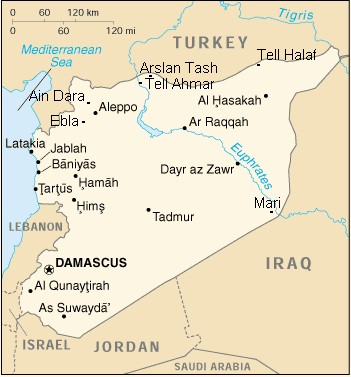
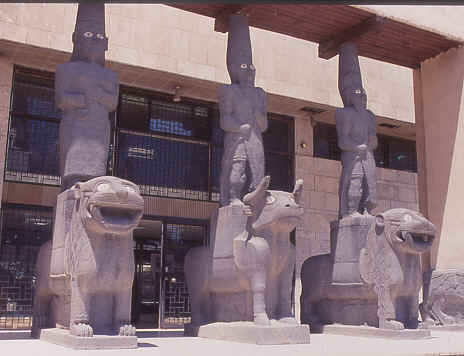
The oldest well-known civilization was Halaf civilization

In the period 6500–5500 B.C., a farming society emerged in northern Mesopotamia and Syria which shared a common culture and produced pottery that is among the finest ever made in the Near East

http://www.metmuseum.org/toah/hd/half/hd_half.htm

Image

Image


http://www.ezida.com/lion%20tell%20halaf.htm


You can still find such heads of wild animals in our ancient Yezidi cemeteries.

That you know nothing doesn’t mean there is nothing
Last edited by Tirigan on Fri Jul 28, 2006 5:52 pm, edited 2 times in total.
I’m PKK!
User avatar
Tirigan
Shermin
Shermin
 
Posts: 353
Joined: Fri Sep 16, 2005 4:36 pm
Highscores: 0
Arcade winning challenges: 0
Has thanked: 0 time
Been thanked: 0 time
Nationality: Kurd

PostAuthor: Tirigan » Fri Jul 28, 2006 5:41 pm

"6000-5300: Halaf Culture inhabited the Kurdish mountains. Named for the ancient mound of Tel Halaf in what is now Syrian Kurdistan (west of the town of Qamishli), this culture is best known for its easily recognizable style of pottery which, fortunately, was produced in abundance. Exquisitely painted, delicately designed Halaf pottery is easily distinguishable from earlier and later productions"

http://www.fortunecity.com/tatooine/ace ... 0bc601.htm
I’m PKK!
User avatar
Tirigan
Shermin
Shermin
 
Posts: 353
Joined: Fri Sep 16, 2005 4:36 pm
Highscores: 0
Arcade winning challenges: 0
Has thanked: 0 time
Been thanked: 0 time
Nationality: Kurd

PostAuthor: Tirigan » Fri Jul 28, 2006 5:46 pm

"Yazidis believe that Zoroaster was a Yezidi who left them. It is evident from Iranian history that Zoroaster came from the people who lived around Lake Urmia. He remained on Mt. Ararat for two years and then returned to his people as a prophet preaching a new religion. He spent ten years recruiting converts among the people around Urmia, but his efforts drew only one person to his beliefs. Finally, he went to the Persians, among whom he found fertile ground for his teachings. According to the Kurdish scholar Tawfiq Wahbi, during the 4th and 5th centuries AD the majority of Kurds east of the Zagros, Cizir, Botan (both in south-eastern Turkey), Kirkuk, and those in the mountains of southeast Kurdistan were not Zoroastrians. The last emperor of the Medes, Rishti Vega-Azhi Dahak (Astyages), killed Zoroaster, ruled his followers and overthrew Vishtaspa (Hystaspes). His army reached the southwest of Afghanistan. During that attack, the army of the Medes inflicted cruelties on Zoroastrians. No doubt this explains in large measure why the Zoroastrians equated the name Azhi Dahak with oppression and cruelty.(see [4])"

http://de.wikipedia.org/wiki/Benutzer:K ... _the_Kurds
Last edited by Tirigan on Fri Jul 28, 2006 6:06 pm, edited 1 time in total.
I’m PKK!
User avatar
Tirigan
Shermin
Shermin
 
Posts: 353
Joined: Fri Sep 16, 2005 4:36 pm
Highscores: 0
Arcade winning challenges: 0
Has thanked: 0 time
Been thanked: 0 time
Nationality: Kurd

PostAuthor: Tirigan » Fri Jul 28, 2006 5:50 pm

"The legacy of the Hurrians to the present culture of the Kurds is fundamental. It is manifest in the realm of Kurdish religion, mythology, material and martial arts, and even the genetics. Nearly three-quarters of Kurdish clan names and roughly half of topographical and urban names are also of Hurrian origin, e.g., the names of the clans of Bukhti, Tirikan, Bazayni, Bakran, Mand; rivers Murad, Balik and Khabur, lake Van; the towns of Mardin, Ziwiya and Dinawar. Mythological and religious symbols present in the art of the later Hurrian dynasties, such as the Mannaeans and Kassites of eastern Kurdistan, and the Lullus of the southeast, present in part what can still be observed in the Kurdish ancient religion of Yazdanism, better-known today by its various denominations as Alevism, Yezidism, and Yarisanism (Ahl-i Haqq).

It is fascinating to recognize the origin of many tattooing motifs still used by the traditional Kurds on their bodies as replicas of those which appear on the Hurrian figurines. One such is the combination that incorporates serpent, sun disc, dog and comb/rain motifs. In fact some of these Hurrian tattoo motifs are also present in the religious decorative arts of the Yezidi Kurds, as found most prominently at the great shrine at Lalish.
"


http://www.krg.org/articles/article_det ... nformation
I’m PKK!
User avatar
Tirigan
Shermin
Shermin
 
Posts: 353
Joined: Fri Sep 16, 2005 4:36 pm
Highscores: 0
Arcade winning challenges: 0
Has thanked: 0 time
Been thanked: 0 time
Nationality: Kurd

PostAuthor: Piling » Fri Jul 28, 2006 7:13 pm

And do you think that Tell Halaf Culture was Yezidi ? :shock: As any Prehistoric culture we know a few things about their cult, as for their language, their traditions, etc. By the way Tell Halaf was a CULTURE not a CIVILISATION.

Hurrians were not an Indo-European ppl. They have another language. Only the aristocracy was Hittits but not especially Kurd (just try to read Hittit language, and see if you can understand it..). In any case lion is a very common symbol in all Mesopotamian culture, not only Yezidism...


You can make the list of all Mesopotamian culture (you forgot Tell Hassuna and Samara culture and after Tell Halaf, Tell Obeid, Uruk, and Jemedet Nasr). But it was not a Yezidi culture....
:roll:

Sumerians were influenced by those people! My ancestors influenced Sumerians.


And they have learnt from Sumerians to write ? and your ancestors have forgotten after to write themselves ?

Tell Obeid Culture replaced Tell Halaf pottery, which slowly disappeared. And the starting of Tell Ubayd was in Southern Mesopotamia (Eridu). And Sumer seemed to have more Tell Ubeydian roots than Tell Halaf.

As for Sumer culture, it borned in South and spred its influence in all the Mesopotamia unitl the North. Not the contrary.

And concerning Guti and the North, Sumerians just described them as tough moutainers and uneducated ennemies, bad luck for you. :lol:


And I repeat that no one knows how Zoroastre is dead, we know nothing sure about him, there are only legends.

This exchange with was very comic, but as far as I am concerned, that's enough, you are absolutely ignorant of all this history, then go to school or univeristy and learn a bit more about Mesopotamia...
User avatar
Piling
Shaswar
Shaswar
Donator
Donator
 
Posts: 8375
Images: 80
Joined: Sat Apr 09, 2005 11:57 am
Location: France
Highscores: 2
Arcade winning challenges: 3
Has thanked: 280 times
Been thanked: 3048 times
Nationality: European

PostAuthor: Tirigan » Fri Jul 28, 2006 7:21 pm

Tirigan wrote:"In fact some of these Hurrian tattoo motifs are also present in the religious decorative arts of the Yezidi Kurds, as found most prominently at the great shrine at Lalish."


http://www.krg.org/articles/article_det ... nformation


Tirigan wrote:"In fact some of these Hurrian tattoo motifs are also present in the religious decorative arts of the Yezidi Kurds, as found most prominently at the great shrine at Lalish."


http://www.krg.org/articles/article_det ... nformation


Tirigan wrote:"In fact some of these Hurrian tattoo motifs are also present in the religious decorative arts of the Yezidi Kurds, as found most prominently at the great shrine at Lalish."


http://www.krg.org/articles/article_det ... nformation
Last edited by Tirigan on Fri Jul 28, 2006 9:56 pm, edited 1 time in total.
I’m PKK!
User avatar
Tirigan
Shermin
Shermin
 
Posts: 353
Joined: Fri Sep 16, 2005 4:36 pm
Highscores: 0
Arcade winning challenges: 0
Has thanked: 0 time
Been thanked: 0 time
Nationality: Kurd

PostAuthor: Tirigan » Fri Jul 28, 2006 7:23 pm

Piling wrote:Hurrians were not an Indo-European ppl. They have another language. Only the aristocracy was Hittits but not especially Kurd (just try to read Hittit language, and see if you can understand it..). In any case lion is a very common symbol in all Mesopotamian culture, not only Yezidism...

So what that Hurrians were not Indo-Eu. people. Can't Kurds have no Indo-Eu people ancestors? :shock: Why is this so impossible? I can't follow you.

We're partly Median, partly Hurrian.
Last edited by Tirigan on Fri Jul 28, 2006 9:55 pm, edited 2 times in total.
I’m PKK!
User avatar
Tirigan
Shermin
Shermin
 
Posts: 353
Joined: Fri Sep 16, 2005 4:36 pm
Highscores: 0
Arcade winning challenges: 0
Has thanked: 0 time
Been thanked: 0 time
Nationality: Kurd

PostAuthor: Tirigan » Fri Jul 28, 2006 7:25 pm

Piling wrote:This exchange with was very comic, but as far as I am concerned, that's enough, you are absolutely ignorant of all this history, then go to school or univeristy and learn a bit more about Mesopotamia...

You’re so ignorant. You don’t even read what I’m writing. What have you studied. ART, History? Everybody without brains can study art.

Please talk about education when you go study Finance/Econometrics at the University like me and come back…
I’m PKK!
User avatar
Tirigan
Shermin
Shermin
 
Posts: 353
Joined: Fri Sep 16, 2005 4:36 pm
Highscores: 0
Arcade winning challenges: 0
Has thanked: 0 time
Been thanked: 0 time
Nationality: Kurd

PostAuthor: Piling » Fri Jul 28, 2006 7:34 pm

And of course your studies give you a lot of knowledges about History of arts and archeology :lol: In general for talking about History and History of arts, better to have studied History and History of arts than FInances...

Everybody without brains can study art.


Just try, then. :lol:
User avatar
Piling
Shaswar
Shaswar
Donator
Donator
 
Posts: 8375
Images: 80
Joined: Sat Apr 09, 2005 11:57 am
Location: France
Highscores: 2
Arcade winning challenges: 3
Has thanked: 280 times
Been thanked: 3048 times
Nationality: European

PostAuthor: Tirigan » Sat Jul 29, 2006 3:30 pm

Piling wrote:And do you think that Tell Halaf Culture was Yezidi ? :shock: As any Prehistoric culture we know a few things about their cult, as for their language, their traditions, etc. By the way Tell Halaf was a CULTURE not a CIVILISATION.

Hurrians were not an Indo-European ppl. They have another language. Only the aristocracy was Hittits but not especially Kurd (just try to read Hittit language, and see if you can understand it..). In any case lion is a very common symbol in all Mesopotamian culture, not only Yezidism...

You can make the list of all Mesopotamian culture (you forgot Tell Hassuna and Samara culture and after Tell Halaf, Tell Obeid, Uruk, and Jemedet Nasr). But it was not a Yezidi culture....
:roll:

And concerning Guti and the North, Sumerians just described them as tough moutainers and uneducated ennemies, bad luck for you. :lol:


These are not lions but animals with horns. Are you blind?

I’ve never said that Yezidism is older as Halaf. I’m just trying to say that Yezidism has got Hurrian roots.

And I think you need to be re-educated, becasue maybe you dated to much in your student time instead reading books and forget getting a knowledge. Since when must we believe what our enemies write about us. Just open newspapers and read what Turksss are writing about us.

Romans wrote about Germanic tribes that they were barbaric and people who never washed and shaved them. Greeks wrote about Persians that they were uncivilized etc.

Sumerians wrote about Hurrians like they were GODs. They called them sons of GODs. Have you never opened history books?
I’m PKK!
User avatar
Tirigan
Shermin
Shermin
 
Posts: 353
Joined: Fri Sep 16, 2005 4:36 pm
Highscores: 0
Arcade winning challenges: 0
Has thanked: 0 time
Been thanked: 0 time
Nationality: Kurd

Previous

Return to History

Who is online

Registered users: Bing [Bot], Google [Bot], Majestic-12 [Bot]

x

#{title}

#{text}