Author: Aslan » Wed Jan 09, 2013 3:31 am
Mr. Öcalan’s Philosophy
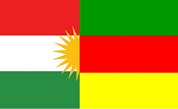
Across a narrow belt of land along Syria’s northern border, Kurds are staking a claim to self-determination. Where the overstretched Syrian army withdrew voluntarily in July last year, People’s Protection Units (YPG) fighters have moved in, setting up checkpoints and raising the yellow, red, and green flag of Western Kurdistan.
In towns such as Kobai, Amuda, Efrin, Al-Malikiyah, Ra’s Al-’Ayn, Al-Darbasiyah, and Al-Ma’bada, it is the Kurdish Supreme Committee that provides local government. The body was formed in July 2012 when the two main Kurdish factions in Syria, the Democratic Union Party (PYD) and the Kurdish National Council (KNC), agreed to run Syrian Kurdistan together. Today, popular committees are effectively responsible for providing everything from security to meeting residents’ food and energy needs. Local elections have been held, Kurdish language schools have opened, and loud political rallies have passed off without incident where once they would have ended in almost-certain arrest.
Qamishli and Hasake remain the only cities in the Kurdish-majority area where regime security forces maintain a presence—but even in those, alongside pictures and statues of the Assads that remain intact, Kurds now enjoy levels of political and cultural freedoms unparalleled by those they had during fifty years of Ba’ath Party rule. Uniquely for Kurdish peoples in the region, these freedoms have been won at relatively little cost to Kurdish life and property. It is a remarkable turnaround for a people whose own rebellion in March 2004 was brutally suppressed, and many of whose members were denied Syrian citizenship as recently as last year.
The decision to reverse the findings of the 1962 census and offer nationality rights to an estimated three hundred thousand Kurds, made by Bashar Al-Assad soon after the outbreak of the uprising, was dismissed by the Arab opposition as a bribe. It may well have been. Syria’s Kurds do not endorse Assad’s brutal crackdown, but neither have they offered wholehearted support to the Arab opposition. Instead, they appear to have steered a cautious middle course, guided by Kurdish national interests.
How those interests are defined is the primary concern of the Syrian franchise of the Kurdish Worker’s Party (PKK), the separatist militant organization that has waged war against Turkey’s military since 1984. It has set up the PYD in Syria, and this affiliate is at the center of the Kurdish quest to capitalize on the growing weakness of central government control, more than any other party. Its strategy is informed by the PKK’s experiences in Turkey, where concessions have been won through a combination of military pressure and—more importantly—political organization.
The PYD aims not to establish its own nation-state (a near impossibility in the circumstances) but to implement a form of Kurdish autonomy that can co-exist with whomever happens to rule from Damascus. It is a new path towards Kurdish autonomy—quite possibly independence in all but name—and it may just work in a fractured and war-torn Syria just as it has done in Iraq.
Democratic confederalism
“In fifty years, the Kurdish parties could not offer anything to Kurdish politics or to the Kurdish people of Western Kurdistan,” said PYD leader Salih Muslim. “We established the PYD, which is different from the classical parties in Syria. We have the philosophy of [PKK leader Abdullah] Öcalan, and his ideas are adapted to the conditions and situation of Western Kurdistan.”
Öcalan’s philosophy has undergone notable changes since his capture by Turkish agents in 1999. Most notably, he has disavowed the demand for independent Kurdish statehood, and instead calls for the adoption of a “non-state social paradigm.” In an eponymous pamphlet, loosely inspired by the European Charter of Local Self-Government, he calls his big idea democratic confederalism. “Democratic confederalism in Kurdistan aims at realizing the self-defense of the peoples by the advancement of democracy in all parts of Kurdistan without questioning the existing political borders,” he wrote from his prison cell. “The movement intends to establish federal structures in Iran, Turkey, Syria, and Iraq that are open for all Kurds and at the same time form an umbrella confederation for all four parts of Kurdistan.”
Democratic confederalism may well be Kurdish independence through the back door. Replacing the problematic aim of cessation with a less threatening and more long-term stratagem based on demanding local political and cultural rights makes sense, but in effect it entails stripping powers away from central government and handing them over to local bodies on the periphery, run by organizations that have little or no loyalty to the nation-state. This could prove problematic for a country like Turkey.
Unperturbed, the Justice and Development Party (JDP) government of Turkish Prime Minister Recep Tayyip Erdoğan sought to capitalize on what it saw as increasing pragmatism on the part of the Kurds. The rise of organizations such as the Union of Communities in Kurdistan (KCK) and the Peace and Democracy Party (BDP), both of which take their cue from guiding principles of Abdullah Öcalan, have given the Kurdish struggle a more political and civic flavor.
In a sign of this changing position on Kurdish issues, prayers in Kurdish were allowed to be held for the first time in Turkey’s mosques, names of cities were changed from Turkish to their original in Kurdish and language classes were taught in schools. The JDP government even set up a state-run Kurdish language TV channel, TRT 6, and launched an initiative, the GAP Action Plan, to channel assistance and investment to the economically deprived southeast. The aim, at least as far as can be ascertained, was to build confidence in order to pave the way for a negotiated settlement with the PKK.
Seasoned observers agree that the so-called Kurdish opening, launched early in 2009, has now floundered. Despite Erdoğan’s bribes, the PKK remains active; despite peace overtures, Turkish soldiers in the southeast of the country continue to die.
If Erdoğan did not reap much reward for his efforts, the same cannot be said of the Kurds. They have come away with a renewed sense of purpose, and are now more self-assertive than ever, having expanded their nonviolent activities and built up their political capacity alongside their military one. In the June 2011 general election, the BDP increased its seats in the Turkish Parliament from 16 to 36, ensuring that the calls for autonomy are heard loud and clear in Ankara.
Young Kurds are now encouraged to work within civil society groups and umbrella organizations that dominate the Kurdish political scene, rather than just join the PKK in the mountains. By offering Kurds a route to get involved without having to risk their lives in armed struggle, the PKK has gained new adherents and respect. “The PKK has become part of the people. You can’t separate them anymore, which means if you want to solve this problem, you need to take the PKK into account,” said Zübeyde Zümrüt, co-chair of the BDP in Diyarbakir province.
New prospects in Syria
As news reports this week indicate, the Turkish government still believes in negotiating with the PKK. That, however, may well be more to do with tempering the growing power of the PKK’s sister organization in Syria, the PYD, than in any genuine desire to offer tangible concessions. Öcalan’s philosophy may still prove to be effective in wearing down the Turkish state in the long run, especially if the JDP proceeds with attempts to transform Turkey into a multi-ethnic state. In the short to medium term, however, Turkey remains too strong and too centralized to buckle under the pressure of Kurdish agitation.
Syria offers a more realistic prospect for the implementation of democratic confederalism. For a start, it is much weaker than Turkey, and contains a Kurdish minority large enough to sustain calls for autonomy. Then there is the geopolitics: as Assad gets progressively weaker, powers as divergent as Iran and the US will be courting the Kurds as a counterweight to the Sunni Islamists. Its neighbors in Iraqi Kurdistan provide a working model to emulate because the Iraqi region runs its own affairs independently of Baghdad rather well, having avoided the sectarian bloodletting that engulfed the rest of the country. There is also an energy interest, with the YPG already providing security for the smooth running of oil installations in Al-Hasakah Governorate. The fact that Syria is an artificial state whose borders were drawn by Britain and France with little attention paid to ethnic and tribal continuity is a further, historical, reason why democratic confederalism may succeed there but fail in Turkey.
But there is a simpler, more practical logic to Öcalan’s philosophy. Put simply, his adherents have delivered modestly in Turkey and spectacularly in Syria. Their organization and political acumen has enabled them to trade armed opposition for de facto autonomy, in the process sparing Kurdish towns and populations the fate of cities like of Homs and Aleppo. They have also rightly identified that to apply pressure on Ankara, a solid foothold in Syria was essential. Regardless of the outcome of the revolution, it will be unlikely that Western Kurdistan will lose self-administration rights anytime soon.
In contrast, the Arab opposition has brought death and destruction upon its towns and populations, with no guarantee of a favorable outcome or of having the necessary capacity to administer areas under its control effectively. Once the regime in Damascus collapses, it is doubtful whether the sacrifices of (predominantly) Sunni Arabs will compare favorably with the rewards that they will reap. The Kurds of Syria have taken the cash in hand and waived the rest.